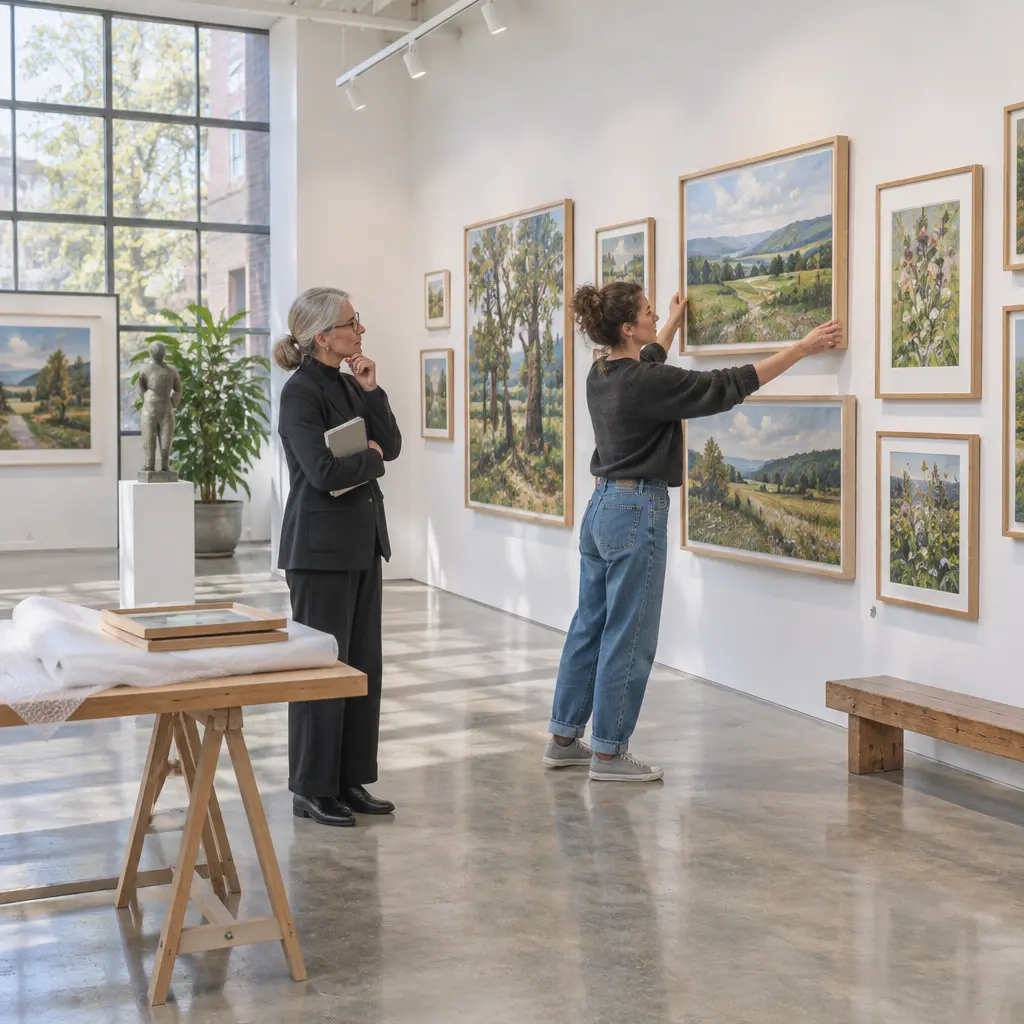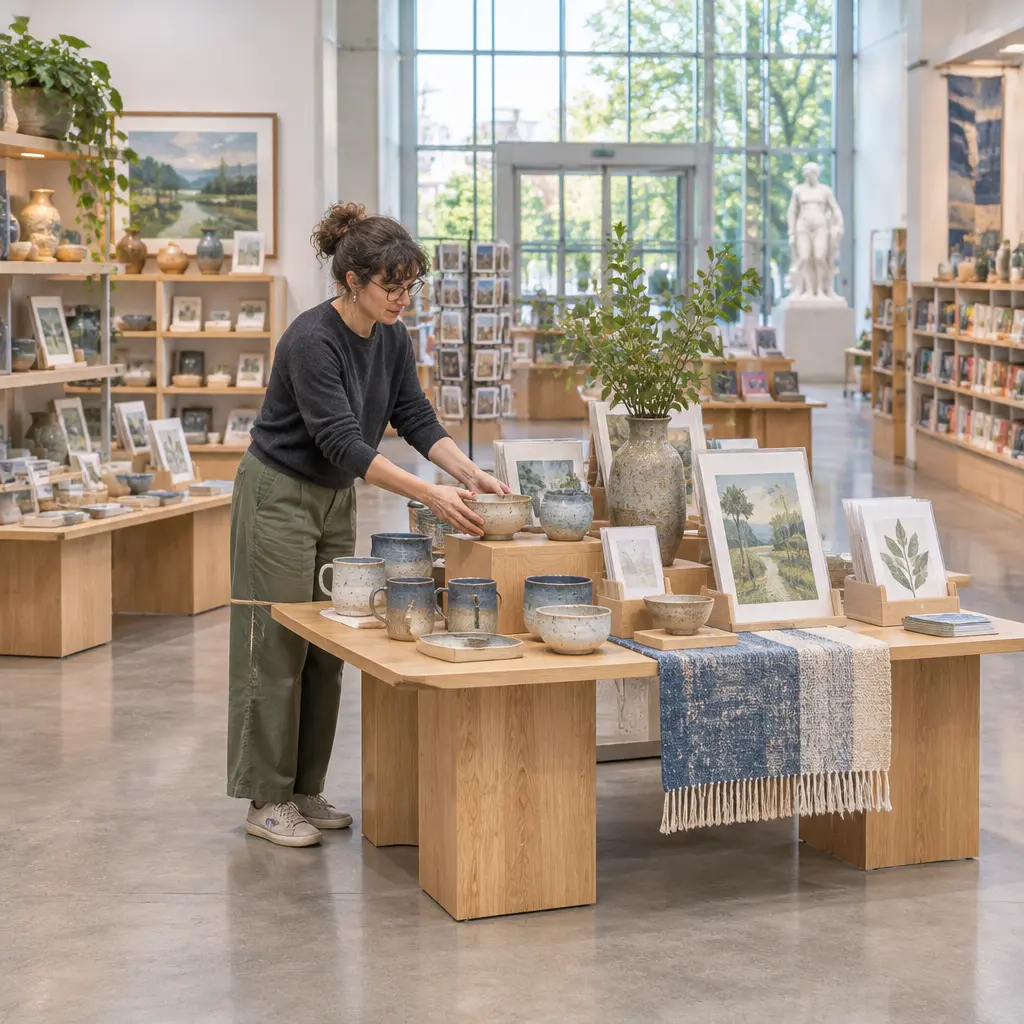
Museum stores can prioritize artist livelihoods over margins by choosing fairly compensated, locally made work and building purchasing practices around transparent prices, reliable orders, and long-term relationships. This approach treats the store not only as a retail operation but also as part of a museum’s cultural mission. It matters in a sector where many artists face irregular income: the National Endowment for the Arts’ 2023 research brief, based on federal labor data, reported that artists’ median annual earnings from their primary occupation were lower than those of workers overall. The strategies below explain what livelihood-centered curation means, how museums can put it into practice, and how to assess its financial and community effects.
Museum-store curation prioritizes artist livelihoods through procurement and partnership
“Artist-livelihood prioritization” is a practical curatorial and purchasing approach: a museum store selects and sells work in ways that give artists fair compensation, visibility, and sustainable opportunities, rather than choosing products mainly for the highest possible retail margin. It is not a standardized accounting term. The definition here synthesizes the American Alliance of Museums’ guidance on museum ethics and the Craft Emergency Relief Fund’s resources on artists’ business sustainability.
The approach includes several related practices: paying clearly stated wholesale prices, commissioning work under written agreements, limiting excessive consignment risk, sourcing from local and underrepresented makers, and tracking whether sales actually generate meaningful artist income. These practices do not require museums to ignore costs. They ask stores to evaluate success alongside mission, fair dealing, and the long-term health of creative communities.
Fair compensation means transparent terms, not just a fair-looking price
Fair compensation is payment that reflects an artist’s materials, labor, expertise, and business costs, with terms communicated before work is delivered. A product’s retail price alone does not show whether the maker is fairly paid: the museum must understand the wholesale price, any commission or royalty, payment timing, and who bears the costs of shipping, returns, damage, and unsold inventory.
The U.S. Bureau of Labor Statistics reported a 2023 median annual wage of $53,140 for fine artists, including painters, sculptors, and illustrators. That figure does not capture the full financial picture for independent artists, whose earnings may combine sales, commissions, teaching, and other work. It does, however, underscore why purchase terms and predictable income matter. Stores can improve transparency by providing written price schedules, paying invoices promptly, and reviewing whether their pricing leaves room for the maker to earn a viable return.
Artist-centered sourcing connects the collection to living creative communities
Artist-centered sourcing means selecting work for its quality, relevance, and relationship to the museum’s place and mission, while seeking suppliers whose identities and practices are represented accurately. Possible categories include local and regional artists, Indigenous makers, artists from communities historically underrepresented in museum retail, and makers whose work relates directly to exhibitions or collections.
The Smithsonian’s National Museum of the American Indian provides a useful model through its museum store and its emphasis on authentic Native-made products. Its approach highlights a key distinction: cultural relevance should be paired with accurate attribution and responsible sourcing, rather than treated as a decorative sales theme. Museums should consult artists and communities, verify maker claims, and avoid presenting culturally significant designs without appropriate permission or context.
Long-term partnerships make income more predictable
A long-term partnership is a continuing relationship in which a museum plans purchases, commissions, or seasonal opportunities with artists instead of relying only on one-off transactions. Advance forecasts, repeat orders, and clear production schedules can help makers plan materials and labor. Written agreements should establish ownership and permitted uses of designs, delivery dates, payment schedules, cancellation terms, and attribution.
The bridge from fair payment to durable partnership is operational consistency. A store that pays promptly but places unpredictable, last-minute orders may still transfer substantial business risk to artists. Museum teams can reduce that risk by sharing sales information where appropriate, offering realistic lead times, and giving makers advance notice when a product is being discontinued.
Museum-store purchasing balances mission, access, and financial sustainability
Mission-led purchasing is the process of choosing goods that support the museum’s educational and cultural purpose while meeting practical requirements such as quality, safety, accessibility, and financial viability. The American Alliance of Museums’ Code of Ethics for Museums calls on museums to act in the public interest and manage resources responsibly. Applied to retail, that principle means a store can pursue revenue while also asking who benefits from its purchasing decisions and whether products reinforce the institution’s stated commitments.
A balanced product mix can include handmade, accessible, and lower-cost goods
A balanced product mix offers different price points and formats without treating artist-made goods as interchangeable with mass-produced merchandise. It might combine original works, small editions, artist-designed stationery, exhibition-related products, and carefully selected everyday items. Lower-cost offerings can widen access, but they should not be used to justify paying makers less than the agreed price or presenting mass-produced copies as handmade work.
The National Endowment for the Arts’ 2023 Artists and Other Cultural Workers report describes the varied occupations and economic circumstances of people working in the arts. That diversity supports a flexible retail strategy: some artists may benefit from limited editions or small objects, while others may prefer fewer, higher-priced works or commissioned products. Stores should discuss format and production scale with makers rather than assuming that expanding volume is always beneficial.
Consignment and wholesale shift risk in different ways
Wholesale purchasing means the museum buys inventory from the artist or supplier at an agreed price, taking responsibility for selling it afterward. Consignment means the artist retains ownership until a sale, with the store paying the maker an agreed share when the item sells. Neither method is inherently fair in every situation: wholesale offers artists more predictable payment, while consignment can help a store test unfamiliar products but leaves the maker carrying the risk of unsold stock.
A livelihood-centered store makes the arrangement explicit and evaluates the burden it places on the artist. A consignment agreement should state the split, payment schedule, inventory records, display period, return conditions, and responsibility for loss or damage. Stores can also limit the number of consignment items, pay on a reliable schedule, and convert successful products to wholesale orders when appropriate.
Pricing should reflect costs without hiding the maker’s contribution
Responsible pricing accounts for the maker’s compensation, materials, production time, packaging, shipping, taxes, and the museum’s retail costs. It also considers what visitors can afford. A museum can explain why an artist-made item costs more than a mass-produced alternative by sharing information about process, materials, place, and the artist’s role—provided the artist agrees to that storytelling and is credited accurately.
A practical pricing review compares the final retail price with the artist’s payment and the museum’s costs, rather than judging a product solely by gross margin. If a piece is too expensive for the intended audience, the store can explore a different size, material, or format with the maker. The aim is to solve for access collaboratively, not to press the artist to absorb the discount.
Museum-store impact measures artist income as well as sales
Impact measurement is the regular review of whether store practices produce the intended cultural, economic, and visitor outcomes. Revenue and gross margin remain useful retail measures, but they do not show how much money reaches artists, whether payments are timely, or whether sourcing is becoming more representative. A broader dashboard can combine financial performance with supplier and partnership indicators.
Useful indicators track payment, participation, and repeat opportunity
A museum can monitor total dollars paid to artists, the share of purchasing spend going directly to makers, average payment time, the proportion of purchases made through wholesale agreements, repeat orders, and the number of artists who receive commissions or recurring opportunities. Where lawful and voluntarily provided, it may also assess representation across its supplier base. These figures should be interpreted carefully: a larger supplier count is not automatically better if orders are too small to provide meaningful income.
The Americans for the Arts’ Arts & Economic Prosperity 6 study estimated that nonprofit arts and culture organizations generated $151.7 billion in economic activity in 2022 across the United States. This national estimate is not a museum-store impact figure, and it should not be used to claim that any individual retail program produces the same effect. It does illustrate that cultural organizations participate in wider local economies, making it reasonable for museums to examine where their spending goes.
Visitor response and artist feedback complete the picture
Visitor response measures whether products are understandable, appealing, and accessible, while artist feedback reveals how purchasing terms work in practice. Stores can use short visitor surveys, sales by product category, event attendance, and artist interviews or confidential check-ins. Feedback should be voluntary and should not make continued access to retail opportunities depend on giving positive reviews.
The results can guide changes in display, interpretation, price range, and ordering. For example, if visitors value learning who made a product, the store can add artist-approved labels and demonstrations. If makers report that small, irregular orders are difficult to fulfill, the store can consolidate orders or set a more predictable seasonal schedule.
Museum-store implementation turns ethical intent into routine practice
Implementation is the conversion of a values statement into budgets, contracts, staff responsibilities, and review procedures. It works best when curators, retail managers, finance teams, educators, and community partners share responsibility. A short written policy can define acceptable sourcing, payment standards, documentation, and escalation steps when a product’s authenticity or cultural permissions are uncertain.
Set procurement standards before selecting products
Procurement standards establish expectations before purchasing begins. They can require clear maker attribution, documented sourcing, written terms, timely payment, and appropriate consultation for culturally sensitive work. Staff training matters: employees who understand the difference between wholesale and consignment, or between artist-made and licensed merchandise, are better equipped to explain products accurately and spot problematic claims.
The museum should also make its process accessible to emerging artists. Open calls, plain-language applications, transparent selection criteria, and reasonable sample requirements can reduce barriers. A policy should not promise more purchasing than the store can sustain; instead, it should explain how opportunities are selected and how artists can obtain feedback.
Plan pilots and review results with artists
A pilot is a limited trial that tests a new sourcing or payment practice before wider adoption. A museum might test guaranteed wholesale purchases for a small group of local makers, a paid exhibition commission, or a seasonal program featuring artists from a community connected to the collection. The pilot should set a budget, define success measures, and gather feedback from participating artists as well as visitors.
At review, compare sales and costs with artist payments, payment timeliness, repeat interest, and qualitative feedback. If a program underperforms financially, examine product selection, display, audience awareness, and order size before concluding that fairer terms are the cause. The findings should lead to specific revisions, not merely a general claim of support for artists.
Conclusion: Museum-store curation can make livelihood support measurable
Artist-livelihood prioritization connects fair compensation, responsible sourcing, and long-term partnerships to the museum’s public mission. Mission-led purchasing balances access with financial sustainability; impact measurement extends beyond margins to include artist income, payment practices, and repeat opportunities; and implementation makes these commitments part of everyday retail work.
Museums can begin by reviewing supplier agreements, calculating how much store spending reaches artists, and asking makers which changes would make their participation more sustainable. A transparent, evidence-based approach can strengthen both the creative community and visitor trust. For further action, museum leaders can consult the American Alliance of Museums’ ethics guidance, the National Endowment for the Arts’ research on artists, and resources from artist-support organizations such as CERF+.
Sources: National Endowment for the Arts, Artists and Other Cultural Workers: A Statistical Portrait, 2023, https://www.arts.gov/impact/research/publications/artists-and-other-cultural-workers-statistical-portrait; U.S. Bureau of Labor Statistics, Occupational Outlook Handbook: Craft and Fine Artists, https://www.bls.gov/ooh/arts-and-design/craft-and-fine-artists.htm; American Alliance of Museums, Code of Ethics for Museums, https://www.aam-us.org/programs/ethics-standards-and-professional-practices/code-of-ethics-for-museums/; Craft Emergency Relief Fund (CERF+), Business Resources for Artists, https://cerfplus.org/get-ready/business-resources/; Smithsonian National Museum of the American Indian, Museum Store, https://americanindian.si.edu/visit/store; Americans for the Arts, Arts & Economic Prosperity 6, https://www.americansforthearts.org/by-program/reports-and-data/research-studies-publications/arts-economic-prosperity-6.