Youth arts curricula are structured learning experiences in visual art, music, dance, theater, and related fields for children and adolescents. A confidence-first curriculum deliberately builds belonging, agency, creative risk-taking, and willingness to participate before emphasizing polished technical performance. This does not mean abandoning technique: it means sequencing instruction so young people feel safe enough to experiment, receive feedback, and persist while they develop skills. Evidence from arts-education research links arts participation with social-emotional outcomes and engagement, while research on supportive learning environments underscores the importance of relationships and students’ sense of belonging. The following sections define the confidence-first approach, explain its teaching practices and developmental rationale, and offer ways to assess and apply it.
Youth Arts Curricula Build Confidence Before Technical Mastery
Technical mastery is the increasingly controlled use of a discipline’s tools, methods, and conventions. In youth arts education, it may involve drawing accurately, keeping musical time, learning choreography, or shaping a convincing character. Confidence, by contrast, is a learner’s belief that they can participate, make choices, cope with mistakes, and improve. A confidence-first curriculum treats these capacities as foundations for sustained practice—not as substitutes for instruction or standards.
The sequence matters because arts learning is public and personal: a young person may have to show unfinished work, perform before peers, or take feedback on a creative choice. The National Core Arts Standards frame artistic learning through creating, performing or presenting, responding, and connecting, making reflection and interpretation part of arts education alongside making. A curriculum can therefore value early experimentation and expression while gradually introducing more demanding technique.
Confidence-First Teaching Defines Youth Arts Curriculum
A confidence-first youth arts curriculum is a planned sequence of accessible, choice-rich arts experiences in which psychological safety, creative agency, and a sense of progress are intentionally developed before technical precision becomes the dominant measure of success. The National Core Arts Standards do not prescribe this exact phrase or a universal order for teaching; rather, their process-based framework supports an approach in which students explore, make, revise, present, and reflect as they learn artistic concepts and skills.
Its central characteristics include welcoming entry points for different experience levels, visible permission to experiment, feedback focused on growth, and a gradual increase in technical challenge. Confidence-first teaching is especially relevant in mixed-ability groups: beginners can contribute meaningfully without being compared with advanced peers, while experienced students still receive opportunities to refine their craft.
Psychological Safety and Belonging
Psychological safety in a youth arts classroom means students can ask questions, share tentative ideas, and make mistakes without humiliation or exclusion. Belonging is the related sense that one’s identity, perspective, and presence are valued. These conditions do not require low expectations; they make it more feasible for learners to accept challenges and use feedback.
The National Academies of Sciences, Engineering, and Medicine identifies supportive relationships, inclusive environments, and opportunities for meaningful participation as important features of settings that foster adolescent development. In practical terms, an ensemble can establish shared agreements about listening and critique, while an art class can allow students to choose whether to display work publicly. These measures reduce avoidable social risk and help participation become a route into learning.
Agency, Choice, and Creative Risk
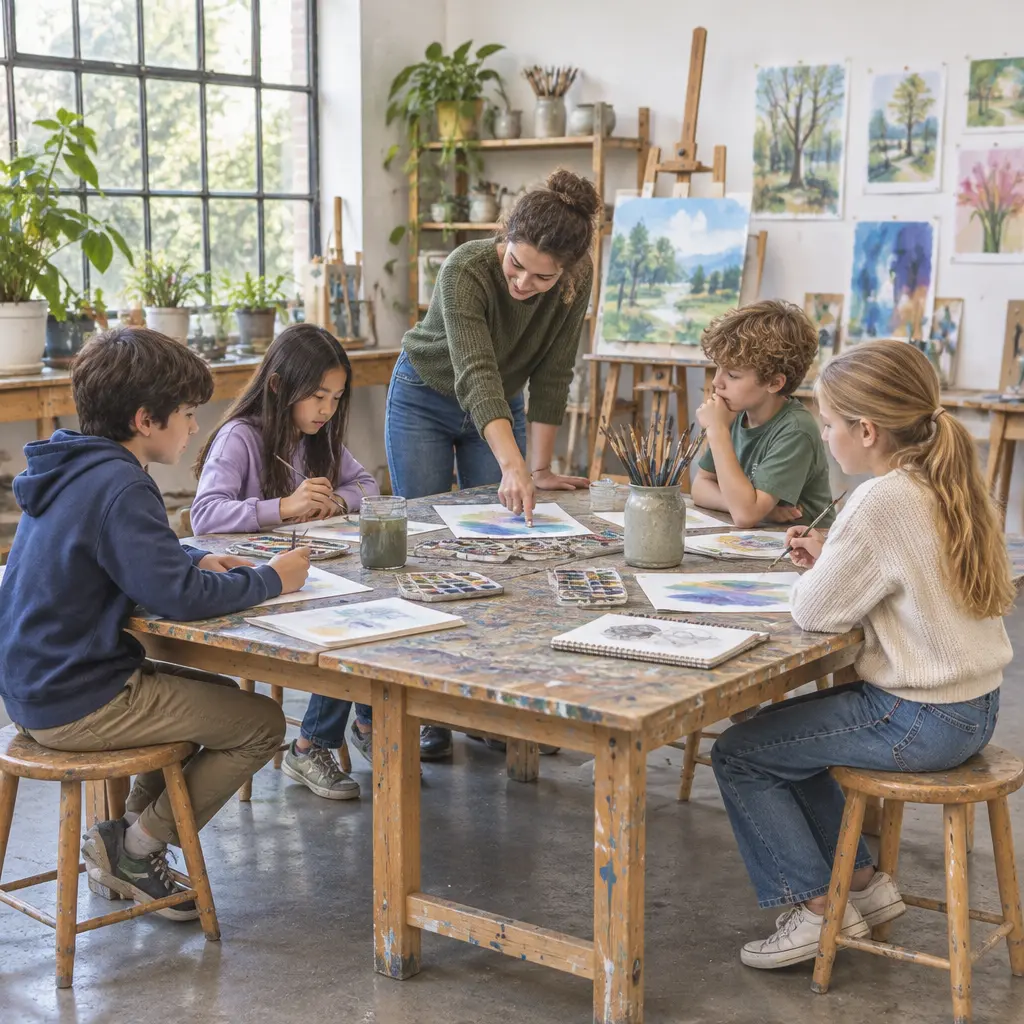
Creative agency is a learner’s capacity to make consequential artistic decisions, such as selecting a subject, instrument, movement, material, or interpretation. Structured choice gives students ownership without leaving them unsupported: a teacher might offer several prompts, a limited set of materials, or a choice between solo and collaborative formats.
The National Core Arts Standards’ creating process includes generating and developing artistic ideas, while its responding process asks learners to interpret and evaluate work. These processes give students roles beyond copying a model. For example, a beginning drama group might invent short scenes from a common prompt before studying formal blocking. Students first experience themselves as makers; instruction can then name and develop the techniques they have already begun to use.
Progress-Oriented Feedback
Progress-oriented feedback describes what a learner did, identifies a specific next step, and treats improvement as achievable through practice. Instead of labeling a drawing “talented” or a performance “bad,” an instructor can point to a strong contrast in the composition and suggest testing how a second value changes the focal point.
This approach connects naturally to formative assessment: short check-ins, rehearsal notes, sketches, and student reflections provide information while work is still developing. The Organisation for Economic Co-operation and Development’s Programme for International Student Assessment has reported that students’ sense of belonging at school is associated with important educational and well-being outcomes, although such associations do not prove that any single classroom practice causes them. In arts settings, constructive feedback can support both belonging and persistence by making improvement observable rather than treating ability as fixed.
Confidence-First Curricula Connect Participation to Arts Learning
Once students feel able to take part, confidence-first teaching connects that participation to the distinct demands of each art form. Its related approaches include process-focused instruction, culturally responsive practice, collaborative learning, and gradual technical scaffolding. These are not competing methods: teachers can combine them to help students move from exploration toward more precise and independent work.
Process-Focused Learning Across Art Forms
Process-focused arts learning gives attention to how work is imagined, made, revised, shared, and interpreted—not only to the finished product. In visual art, students may keep a process journal; in music, they may record and compare rehearsal attempts; in dance, they may explore movement variations before refining a sequence; in theater, they may improvise before shaping a script.
The National Core Arts Standards organize learning around creating, performing or presenting, responding, and connecting. That framework supports process and reflection as legitimate learning outcomes. It also gives instructors a way to teach technique in context: a student learns a particular brushstroke, rhythmic pattern, or stage convention because it helps solve an artistic problem, rather than because precision is demanded without purpose.
Culturally Responsive and Accessible Instruction
Culturally responsive arts instruction recognizes that students bring different traditions, languages, identities, resources, and artistic experiences into the classroom. Accessible teaching removes unnecessary barriers through options such as varied materials, adaptable movement, visual demonstrations, multilingual resources, and multiple ways to participate.
This matters because confidence can be undermined when a curriculum treats one cultural tradition or one form of prior training as the default. The National Endowment for the Arts’ research on arts participation documents differences in access and participation across demographic groups, emphasizing that opportunity is not evenly distributed. Teachers can respond by inviting students’ cultural knowledge into projects, presenting artists from a range of traditions, and distinguishing artistic standards from assumptions about what “good” art must look or sound like.
Collaboration and Peer Learning
Collaborative arts learning lets young people contribute to a shared outcome while practicing communication, negotiation, and mutual feedback. A group mural, chamber ensemble, devised theater piece, or peer choreography task can distribute responsibility so that students learn from one another rather than relying solely on teacher demonstration.
The Education Commission of the States has described arts education as a way schools can support broader student development, while cautioning that outcomes depend on program design and implementation. Collaboration is most useful when roles are clear and participation is equitable. Rotating responsibilities—such as facilitator, materials manager, performer, or observer—helps prevent confident or advanced students from dominating and gives every learner a meaningful contribution.
Gradual Technical Scaffolding
Technical scaffolding is the staged support that helps learners perform tasks they could not yet manage independently. A teacher may demonstrate a skill, break it into smaller steps, provide guided practice, and then invite students to apply it in their own work. Confidence-first curricula use this progression after or alongside exploratory experiences, so technique helps students realize intentions rather than simply comply with drills.
The approach is not “confidence instead of competence.” Rather, students encounter technique at a level that makes success possible while still requiring effort. For instance, a beginner musician can first improvise with a small set of notes, then learn notation and rhythmic control to expand the music. A drawing student can begin with observation and choice of subject, then practice proportion, value, and perspective as tools for communicating more clearly.
Confidence-First Arts Programs Can Be Designed and Evaluated
A practical program makes confidence-building visible in its lesson sequence, classroom routines, and assessment. It also checks whether students are developing artistic knowledge—not merely enjoying activities. The National Endowment for the Arts’ Arts Education Partnership has emphasized the value of sustained, sequential arts learning; a single showcase or occasional enrichment session is not equivalent to a coherent curriculum.
A Sample Sequence from Exploration to Mastery
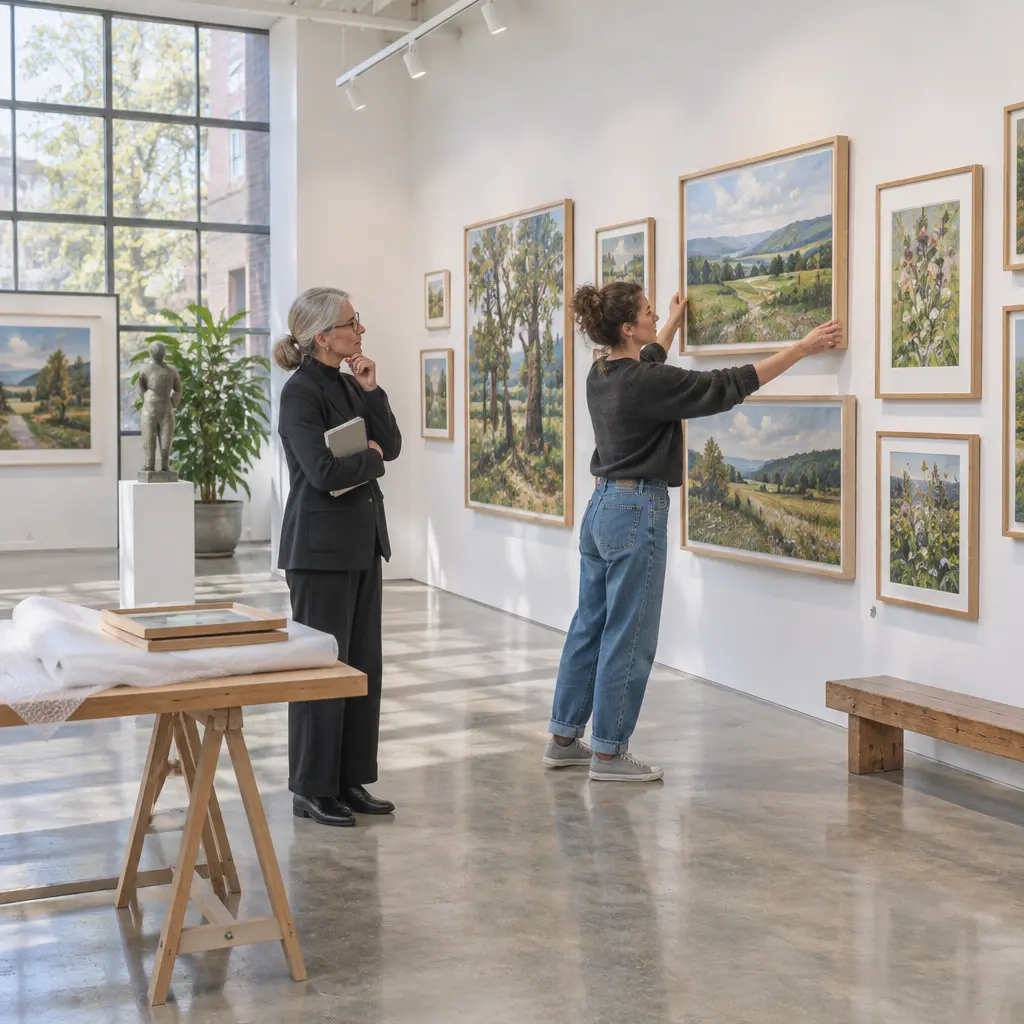
A confidence-first unit can move through four connected stages: low-stakes exploration, guided skill-building, student-directed creation, and reflection or presentation. For example, a visual-art unit might begin with students testing mark-making tools, continue with a short lesson on line and contrast, invite each learner to create an image around a personal or shared theme, and conclude with a choice of private reflection, small-group sharing, or public display.
The same sequence adapts to other disciplines. A dance class can explore pathways and levels before learning a specific technique; a theater group can improvise before rehearsing scripted scenes; a music class can experiment with sound before formalizing rhythmic notation. Teachers should adjust the pace to students’ ages, access needs, prior experience, and goals rather than treating the stages as a rigid formula.
Assessment That Measures Growth and Craft
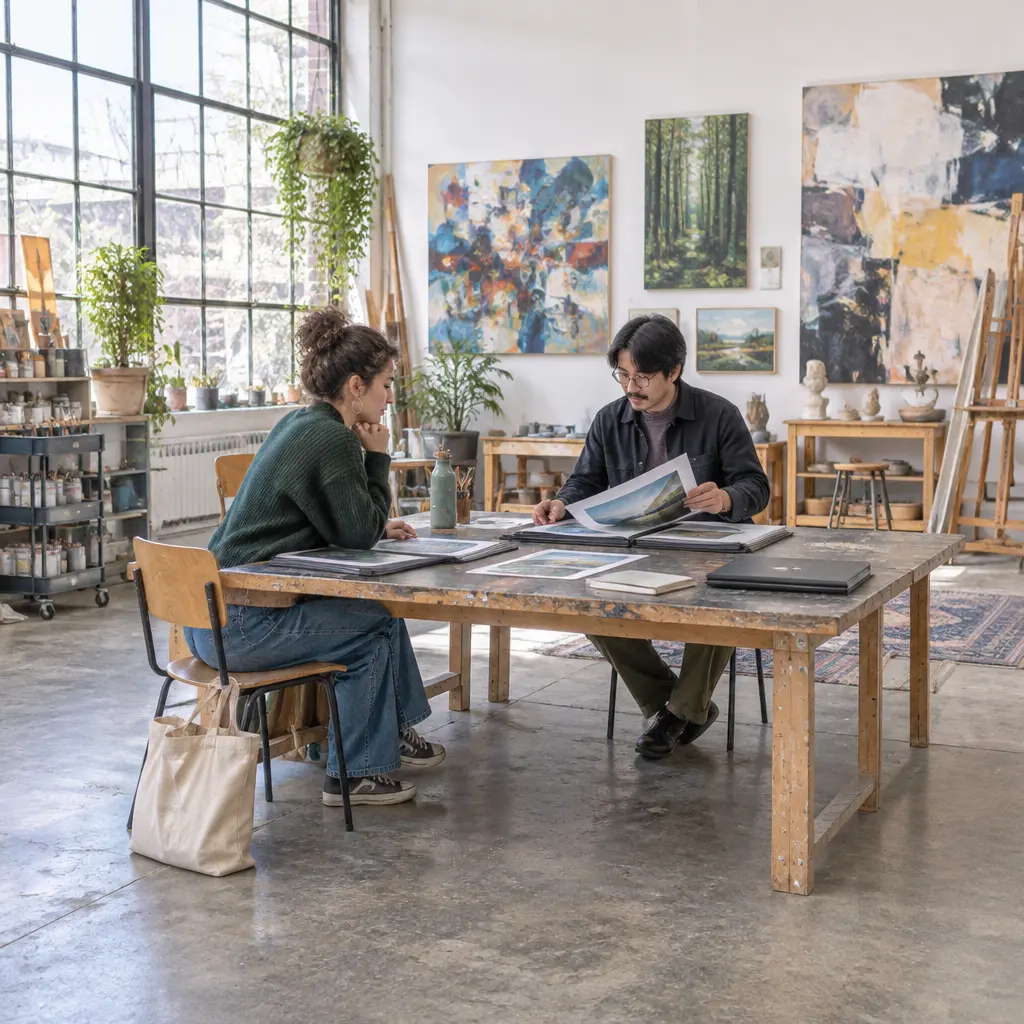
Balanced assessment tracks both artistic development and conditions for participation. Useful evidence may include a portfolio, rehearsal or practice logs, skill demonstrations, student self-assessments, and reflections about choices and revisions. A rubric can separately describe technique, creative decision-making, persistence, and reflection, so that a technically unfinished project can still show meaningful learning.
Program leaders should also review participation patterns: who volunteers, who completes work, whose contributions shape group projects, and who returns for subsequent courses. The National Center for Education Statistics and the National Endowment for the Arts provide data on school arts offerings and arts participation that can help frame local questions about access. National figures do not substitute for a school’s own evidence, but they reinforce the need to examine who has opportunities to learn and whether those opportunities are sustained.
Real-World Application: A Community Mural Project
A community mural project illustrates how confidence and technique can develop together. Students might begin by discussing local stories and collecting visual ideas, then work in small teams to sketch possible compositions. The instructor can teach color mixing, proportion, surface preparation, and safe tool use as the project requires them. Students retain authorship through choices about imagery and layout, while shared production makes planning and revision visible.
The example also reveals implementation challenges: the group needs consent for public display, accessible roles for students with different abilities, appropriate materials, and a plan for maintaining the artwork. A successful outcome is therefore more than a finished wall. It includes evidence that learners contributed, developed skills, made decisions, and could explain how their work changed through feedback.
Conclusion: Confidence Supports Technical Mastery in Youth Arts
Confidence-first youth arts curricula place belonging, agency, creative risk, and growth-oriented feedback at the beginning of a learning pathway, then connect those foundations to increasingly demanding technique. Process-focused learning, culturally responsive teaching, collaboration, and gradual scaffolding help students participate while building discipline-specific skills. Assessment should recognize both the quality of artistic work and the learning that produced it.
The broader implication is that technical standards and student confidence need not compete. When young people are invited to experiment, make consequential choices, and learn from revision, more of them can enter arts education as creators rather than spectators. Educators and program leaders can begin by reviewing a unit for low-stakes entry points, meaningful student choice, accessible feedback, and evidence of skill growth—and then consult the National Core Arts Standards and the research sources below when refining their approach.
Sources: National Coalition for Core Arts Standards, National Core Arts Standards, https://www.nationalartsstandards.org/; National Academies of Sciences, Engineering, and Medicine, The Promise of Adolescence: Realizing Opportunity for All Youth, https://doi.org/10.17226/25388; Organisation for Economic Co-operation and Development, PISA 2018 Results, Volume III: What School Life Means for Students’ Lives, https://doi.org/10.1787/acd78851-en; National Endowment for the Arts, Arts Data Profile: Arts Education in Public Elementary and Secondary Schools, https://www.arts.gov/impact/research/arts-data-profile-series/adp-18; Education Commission of the States, Arts Education, https://www.ecs.org/arts-education/; National Center for Education Statistics, The Condition of Education, https://nces.ed.gov/programs/coe/.