Exhibition design is the planning of objects, spaces, interpretation, and visitor experiences so people can encounter a subject in meaningful and accessible ways. For public audiences, effective design combines clear storytelling, thoughtful spatial organization, inclusive interpretation, and evaluation: the Smithsonian’s accessibility guidance, for example, treats access as a core design concern rather than an add-on, while visitor research shows that museums serve diverse audiences with different needs and levels of prior knowledge. The sections below explain exhibition design’s defining principles, its main forms and components, practical methods for making exhibitions welcoming, and examples of how institutions test whether a design works.
Exhibition Design: Purpose, Audience, and Public Interpretation
Exhibition design is the coordinated process of shaping an exhibition’s content and physical or digital environment to support a visitor’s understanding and experience. The American Alliance of Museums describes exhibitions as a central means by which museums connect collections and ideas with the public; in practice, design brings together curatorial research, interpretation, architecture, graphic design, lighting, conservation, accessibility, and visitor services. Its purpose is not simply to display objects, but to help people notice, interpret, question, and remember them.
Public-facing exhibitions vary widely: they may be object-led displays, thematic or chronological galleries, immersive installations, interactive science exhibits, community-curated presentations, or online exhibitions. The choice depends on the subject, available evidence, audience, space, budget, and institutional goals. A historical exhibition may prioritize chronology and original documents; a science exhibition may foreground experimentation; a community exhibition may center personal testimony and multiple perspectives.
The stakes are substantial. The Institute of Museum and Library Services’ 2018 Museum Universe Data File identified more than 35,000 museums in the United States, illustrating the scale and variety of institutions communicating with the public. That reach makes design decisions consequential: a difficult-to-read label, confusing route, or inaccessible interface can prevent visitors from engaging with otherwise valuable content.
Exhibition Design Principles for Public Audiences
A useful definition of exhibition design emphasizes both communication and experience. The Smithsonian Institution’s Cooper Hewitt, Smithsonian Design Museum presents design as a process of developing solutions in response to human needs and context. Applied to exhibitions, this means that designers should begin with what visitors need to understand and do, then shape the content, space, and media accordingly. Several related principles guide that process.
Storytelling and interpretive structure
Interpretive structure is the framework that connects evidence, objects, and ideas into a legible public narrative. It might be chronological, thematic, comparative, or organized around a question. A strong structure makes the exhibition’s central idea apparent while allowing individual objects and voices to retain complexity. The National Park Service’s interpretive guidance emphasizes that interpretation should connect tangible resources with the meanings and ideas they can help visitors discover.
Designers commonly use an introductory statement, section headings, object labels, maps, and transitions to make that structure visible. These elements should work together rather than repeat one another. For example, an introduction can pose the exhibition’s central question, while a later gallery presents contrasting evidence that invites visitors to reconsider an initial assumption.
Spatial planning and visitor flow
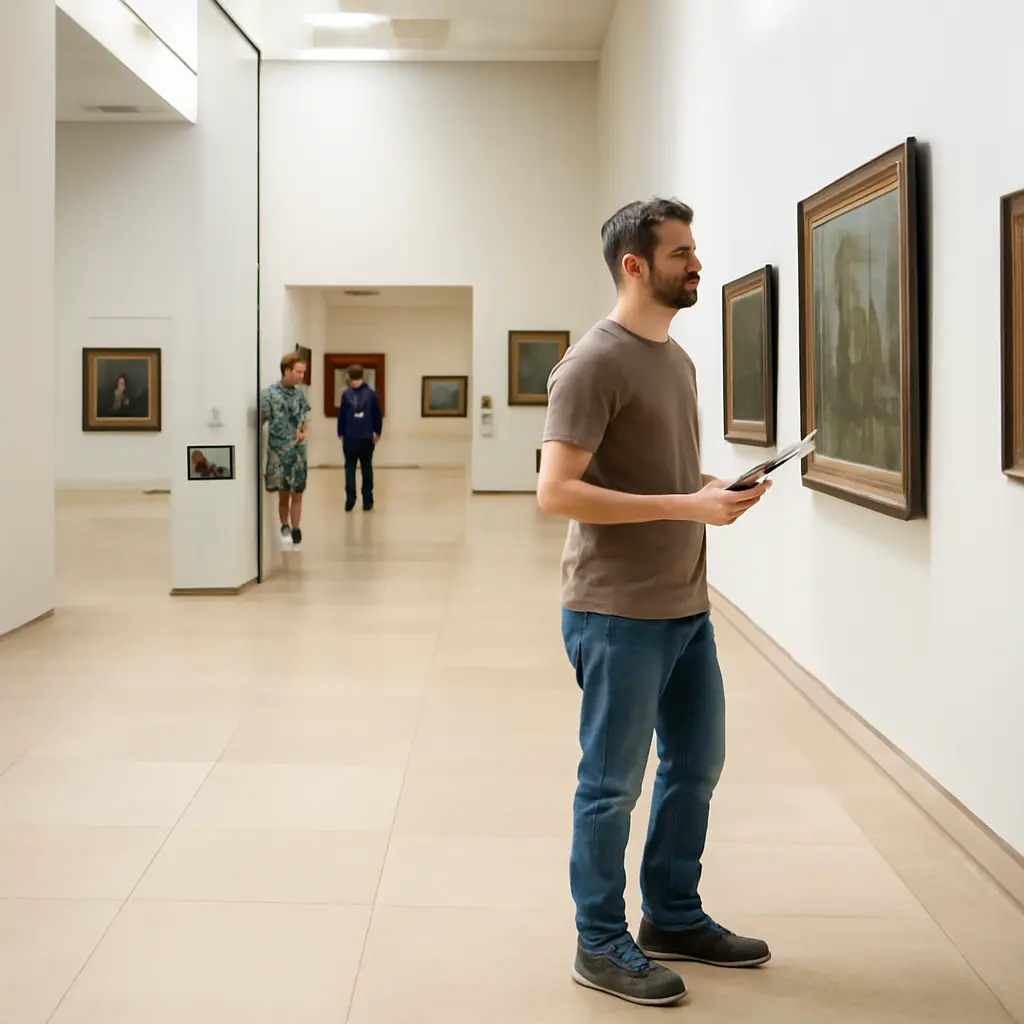
Spatial planning arranges entrances, circulation routes, sightlines, seating, displays, and gathering areas to shape how people move and interact. A route may be linear, open-ended, or a combination of both. Linear layouts can support a sequence, while open layouts give visitors greater freedom to choose what to explore. Designers must also account for bottlenecks, group movement, wheelchair turning space, rest points, and clear routes to exits and amenities.
Visitor flow is not just a matter of directing traffic. It affects what people notice, how long they can spend with an object, and whether they feel comfortable staying in a gallery. The Smithsonian’s accessibility guidance recommends considering circulation and reach ranges during planning, rather than attempting to retrofit access after displays are built. A floor plan or visitor-flow diagram can help teams identify likely congestion and test alternative arrangements before installation.
Objects, labels, and visual hierarchy
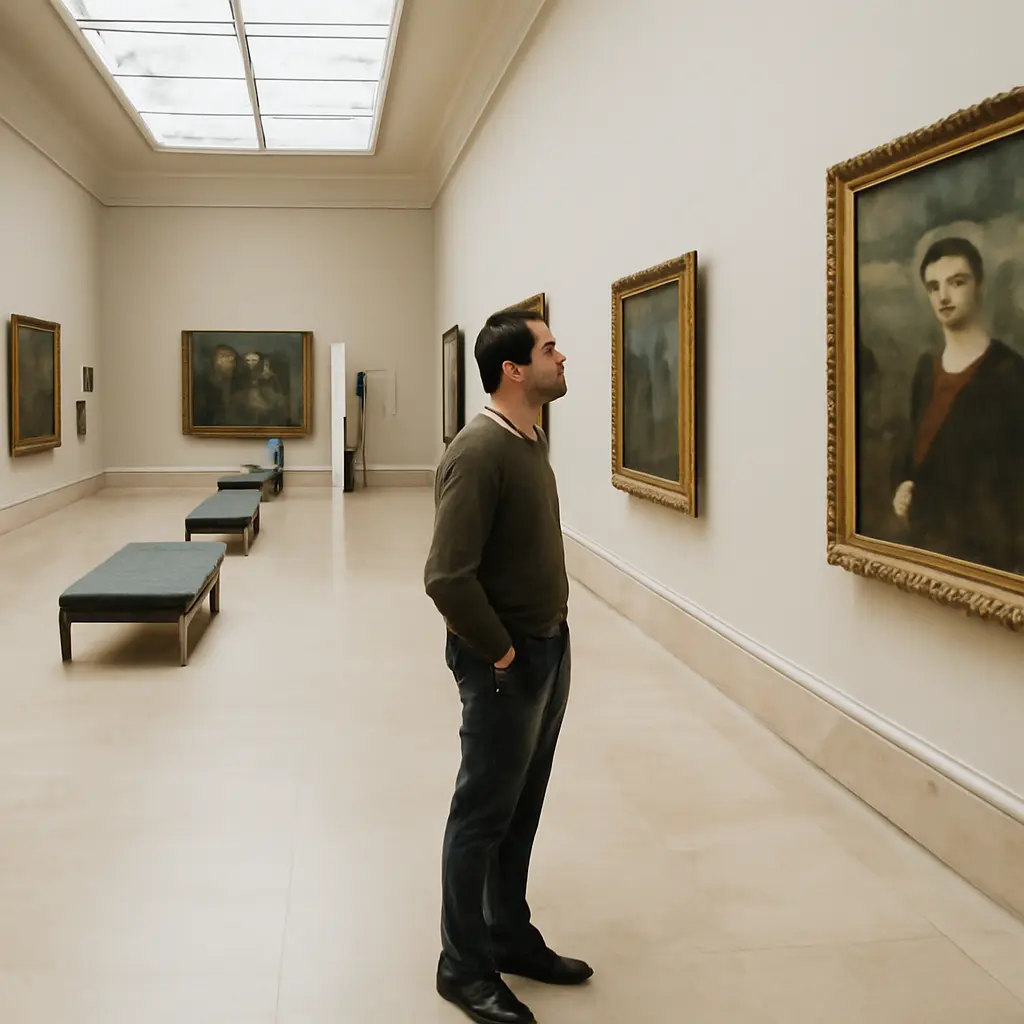
Object selection and placement determine what visitors encounter and how evidence is framed. A focal object may anchor a gallery, while smaller objects or documents provide context and comparison. Labels then help visitors understand what they are seeing. Effective label systems distinguish levels of information—for example, a short introductory panel, concise section text, and more detailed object labels—so visitors can choose how deeply to read.
Visual hierarchy uses scale, contrast, type, color, spacing, and placement to signal what is most important. Readability depends on more than font size: lighting, viewing distance, contrast, language complexity, and the height of text all matter. The National Park Service’s guidance on wayside exhibits recommends writing for a broad public audience and pairing text with visual evidence. In galleries, the same principle supports clear, approachable interpretation without oversimplifying the subject.
Exhibition Design Methods for Inclusive Participation
Once a narrative and spatial concept are established, exhibition teams must decide who the exhibition is for and how different visitors will take part. Audience-centered design treats visitors not as a single average user, but as people with varying ages, languages, abilities, interests, cultural knowledge, and reasons for visiting. This approach connects accessibility, participation, and evaluation: each helps reveal whether the exhibition works beyond the design team’s assumptions.
Universal design and accessibility
Universal design is the practice of developing environments and products usable by as many people as possible, without requiring specialized adaptation. In exhibitions, it can include step-free routes, seating, legible text, captions, audio description, tactile resources, clear wayfinding, and digital content compatible with assistive technology. The Smithsonian Accessibility Program advises institutions to address physical, communication, and programmatic access across the visitor experience.
Accessibility is most effective when embedded from the beginning. A captioned video, for instance, benefits Deaf and hard-of-hearing visitors and also helps people viewing in a noisy gallery or learning a language. Similarly, seating supports visitors with mobility needs as well as families, older adults, and anyone who needs a pause. The U.S. Access Board’s standards establish accessibility requirements for facilities, while exhibition teams must also consider communication and sensory access that building compliance alone does not guarantee.
Multisensory and interactive experiences
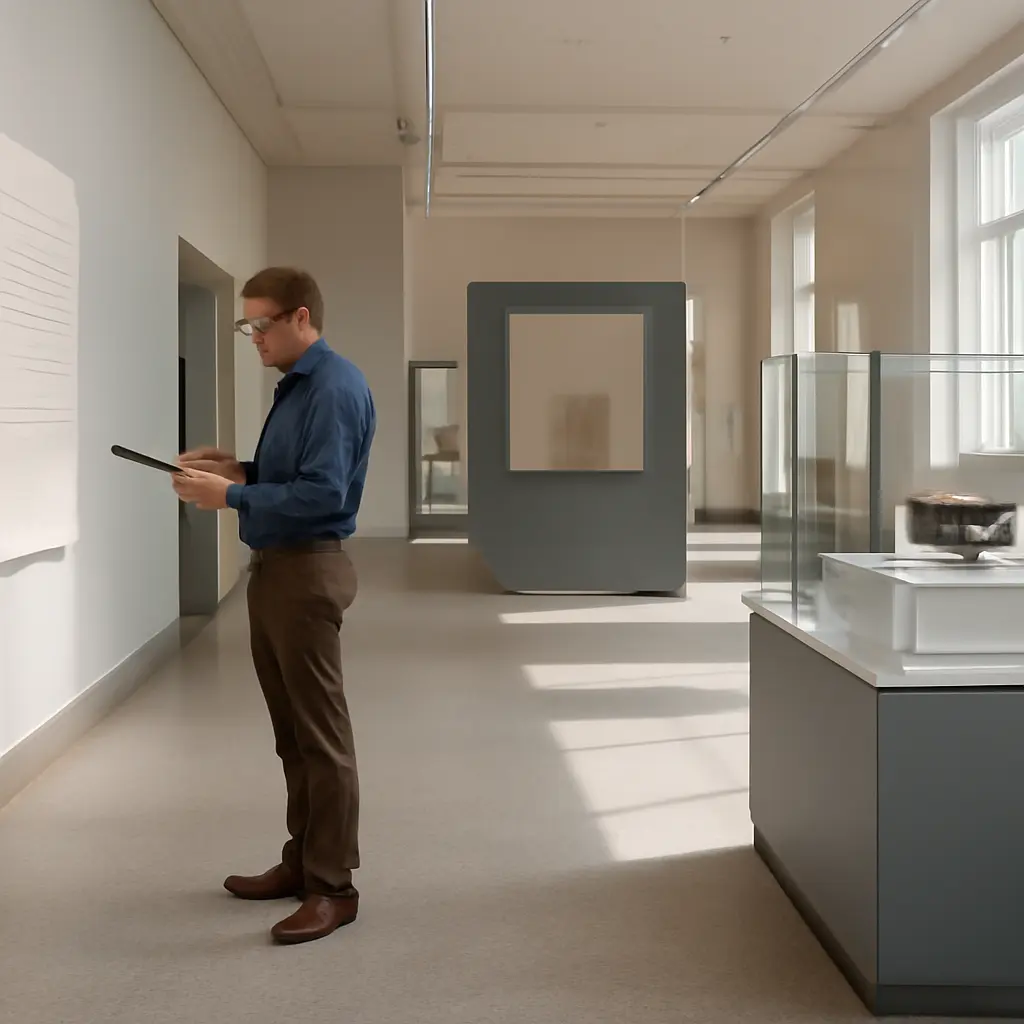
Interactive exhibition design invites visitors to act, manipulate, compare, listen, or respond rather than only observe. Interactions may be physical, digital, conversational, or sensory. They are most useful when the action supports the exhibition’s learning goals—for example, a working model that reveals a scientific process—rather than adding novelty without interpretive value.
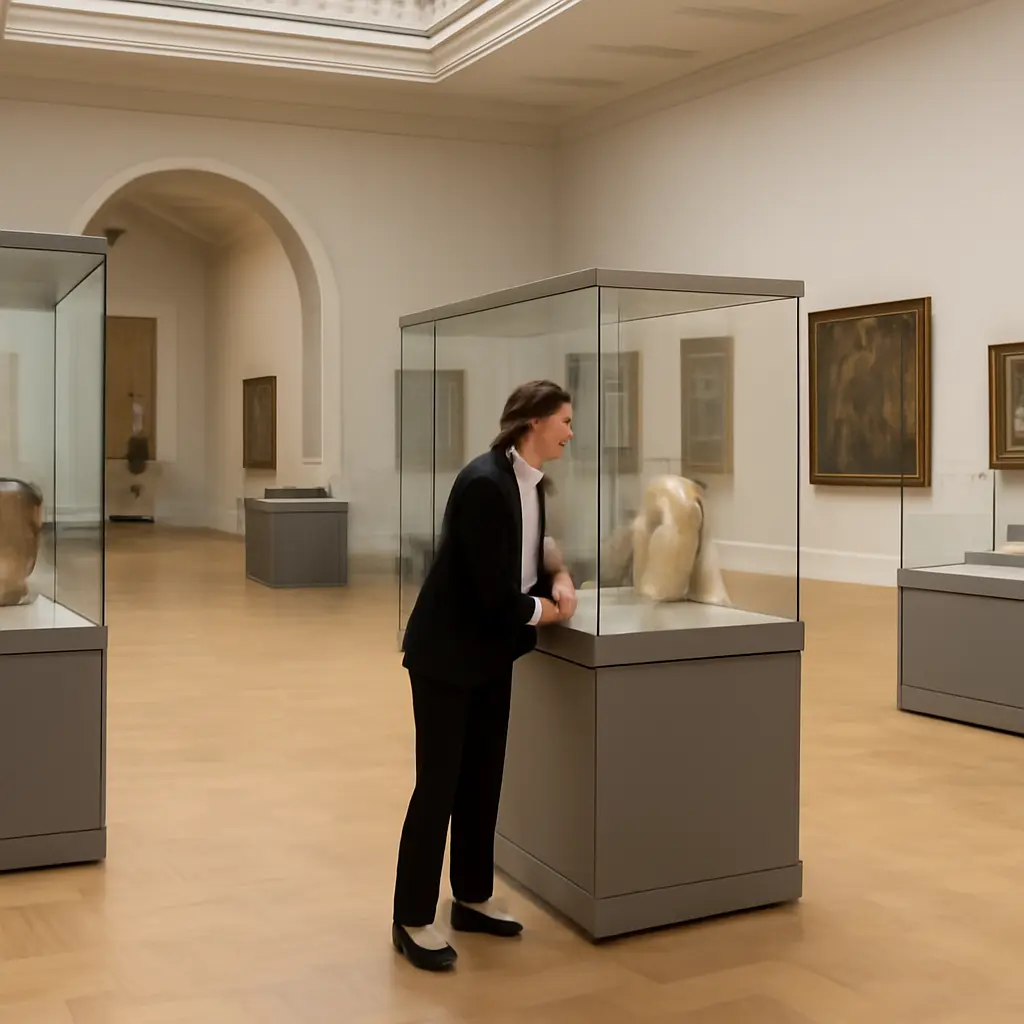
Multisensory interpretation can make ideas accessible through sound, touch, movement, or smell, but it requires careful choices. Tactile replicas can provide access to forms that cannot be touched in their original state; audio can convey oral histories; and interactive stations can let visitors compare evidence. Designers should also offer alternatives for people who cannot or prefer not to use a particular interaction, and consider sensory intensity, maintenance, hygiene, and crowding.
Community participation and representation
Participatory exhibition design involves communities in decisions about content, interpretation, object selection, and presentation. It can include interviews, advisory groups, co-curation, community loans, or review of draft labels. Participation can improve accuracy and trust, especially when an exhibition addresses living cultures, contested histories, or objects connected to communities outside the institution.
Participation should be meaningful rather than symbolic. Teams need to clarify how advice will affect decisions, recognize contributors’ expertise, and address consent, attribution, compensation, and the handling of sensitive knowledge. The International Council of Museums’ 2022 museum definition emphasizes that museums work in the service of society and its communities, reinforcing the importance of public engagement in institutional practice.
Exhibition Design Evaluation and Real-World Practice
A design is not complete when the installation opens. Evaluation checks whether visitors can find their way, understand the central ideas, use interactive elements, and access the content. Formative evaluation takes place during development; summative evaluation examines the exhibition after opening. Both help teams distinguish between what they intended visitors to experience and what actually happens.
Prototyping and visitor studies
Prototyping means testing a low-cost version of a design before committing to full production. Teams can mock up labels, build temporary interactives, or tape floor layouts at full scale. They may observe visitor routes, conduct brief interviews, test comprehension, or ask people to complete a task. Findings can reveal, for example, that visitors miss a key panel, misunderstand an instruction, or gather in a way that blocks circulation.
The American Association for State and Local History’s evaluation resources and the Visitor Studies Association’s professional guidance support the use of systematic visitor research in informal learning settings. Evaluation is especially valuable when conducted with audiences who are often underrepresented in institutional testing. A small, well-designed study can expose practical problems early, when changes are less expensive than after fabrication and installation.
Case study: Smithsonian National Museum of African American History and Culture
The Smithsonian National Museum of African American History and Culture offers a prominent example of exhibition design shaped by narrative, architecture, and visitor movement. Its history galleries use a descending sequence through historical periods, bringing visitors into a deliberately structured encounter with the history of slavery and its legacies before they move toward galleries addressing later eras. The building’s architecture, interpretive sequence, and collection displays work together to frame a complex national history.
The example illustrates both the power and responsibility of spatial storytelling. A carefully planned sequence can support context and emotional progression, but it must also provide clear orientation, accessible routes, opportunities to pause, and room for visitors to respond differently. The museum’s public planning materials and interpretive approach demonstrate why architectural decisions and curatorial choices should be developed together rather than treated as separate tasks.
Practical checklist for exhibition teams
A practical design review can connect goals to visitor experience at each stage:
- State the exhibition’s central idea and identify the evidence that supports it.
- Define intended audiences while recognizing that visitors bring different needs and prior knowledge.
- Map routes, sightlines, seating, accessible clearances, and likely gathering points.
- Use a consistent hierarchy for introductory, section, and object-level interpretation.
- Provide alternatives for essential content, including captioning and accessible digital or tactile formats where appropriate.
- Test labels, wayfinding, and interactions with visitors before final production.
- Evaluate the opened exhibition and use findings to improve both the display and future projects.
Conclusion: Exhibition Design as Public Service
Exhibition design brings together interpretive storytelling, spatial planning, object presentation, accessibility, participation, and evaluation. These elements determine not only what an institution displays, but how the public can encounter and make sense of it. The strongest exhibitions pair a clear structure with room for curiosity, multiple perspectives, and different modes of engagement.
Because exhibitions shape public understanding and belonging, design decisions have implications beyond aesthetics. Institutions can strengthen their work by involving communities early, building access into every stage, testing ideas with real visitors, and sharing what they learn. For further exploration, consult the Smithsonian Accessibility Program, the Visitor Studies Association, and the National Park Service’s interpretive guidance when planning or evaluating a public exhibition.
Sources: Institute of Museum and Library Services, Museum Universe Data File, 2018, https://www.imls.gov/research-evaluation/data-collection/museum-universe-data-file; American Alliance of Museums, About Museums, https://www.aam-us.org/programs/about-museums/; Cooper Hewitt, Smithsonian Design Museum, Design and the Process of Design, https://www.cooperhewitt.org/education/; National Park Service, Foundations of Interpretation, https://www.nps.gov/subjects/interpretation/foundations.htm; Smithsonian Institution, Smithsonian Guidelines for Accessible Exhibition Design, https://access.si.edu/museum-professionals/smithsonian-guidelines-accessible-exhibition-design; U.S. Access Board, Architectural Barriers Act and Americans with Disabilities Act Accessibility Guidelines, https://www.access-board.gov/ada/; International Council of Museums, Museum Definition, 2022, https://icom.museum/en/resources/standards-guidelines/museum-definition/; Visitor Studies Association, About Visitor Studies, https://visitorstudies.org/; Smithsonian National Museum of African American History and Culture, History Galleries, https://nmaahc.si.edu/explore/exhibitions/history-galleries.